POT #2 | Manufacturer’s Moving To B2C Is A Mistake.
Manufacturers should continue focusing on what they do best. Manufacturing. Taking their products directly to consumers often converts products into cheap commodities with no hope of ever changing it. Several factors in recent years have forced many to test the waters in B2C trading. Some going direct to market, while others use CBEC partners like Alixpress and Temu.
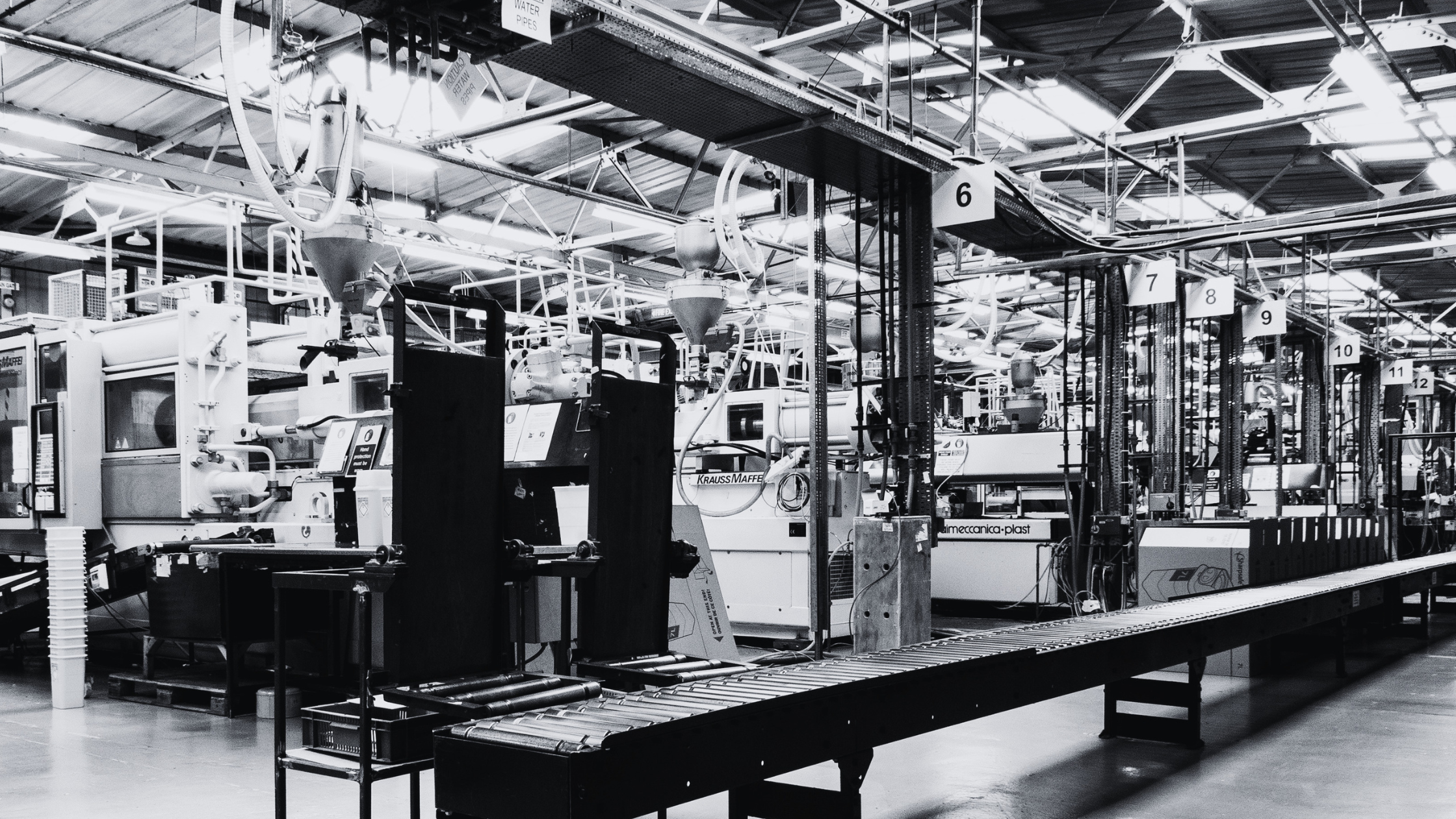
*Random image from the inside of a factory.
Why there is risk in this move?
When manufacturers go direct to market, they often go in competing on price. Not one of them. All of them. They battle each other out for market share, often believing that they can make their margins later when they own the category. The truth is that the category ownership rarely materializes. Its no secret that some battles end in negative margins to drive out competition or to close on long term, high volume deals with almost no margin.
This type of behavior happens in B2C and Private Label. Margins are usually already low, relying on volumes or other economies of scale to make money. This behavior tends to drive margins down further in an industry where there is no bottom. Slowly products become unsustainable and get discontinued.
The missing ingredient that keeps price elasticity stable ? Psychological Value.
“The concept of Psychological Value suggests that the worth of a product, service, or experience isn’t found in its price tag or utility, but in how it makes a person feel. It’s the gap between objective reality and subjective perception.“”
Selling On Price Cannibalizes Margin
I have personally seen this happen when supplying top retailers with Private Label Products, and I am witnessing the same thing from the outside with my own purchases from CBEC Partners.
With Private Label, manufacturers are obsessed with getting in with biggest Big Box retailers. With good reason, as this is where the volume and money lies. But it can come with a sacrifice. There are numerous examples of what I would call “buyers arrogance” from big box retailers.
The buyers come up with unrealistic price points and other service demands to get the deal closed. Many times, manufacturing partners close on unsustainable deals, with the expectation that things can improve later. Many times, even with the buyers backing.
But when the time comes for the factory to increase margins, life happens. Think Covid or the Iran War. This eventually leads to an unhealthy situation, which either kills the product immediately, or leads to a decline in quality. The same case can be made with CBEC partners that link factories directly to consumers. I am referring to marketplace channels, like TEMU, ALIXPRESS and Amazon. The battlefield for sales is fought on who has the best price. This leads to misjudgements in quality and customer service.
Building a psychological value on the product is the only weapon that truly works in these price wars.
Building Psychological Value
Manufacturers should focus on partnering with Brand Partners and Incubators, rather than direct to marker CBEC partners or even big Private Label deals. While the beginning of these relationships usually start with low order quantities (Which manufacturing hates), the right partner will turn this into a long and sustainable business. Manufacturing gets to focus on the challenges of their own business, like process, labour and the acquisition of raw materials, while the Brand Partners can focus on what they can bring to the table.
A good brand partner will create a brand that resonates with the market that it sells in. It speaks directly to consumers. It builds a story and purpose for the product that is relevant in the local market. It builds a User Manual that its audience understands and relates to. They assist with the strategy and positioning of the product in the market by establishing market validation and a brand identity. Things a foreign owned entity just cant do. Many do try and think they are doing well. As a local would say, its easy to see that they “don’t know what they don’t know”.
A local brand partner is a point of local connection, between not only the best retailers and sales channels, but also the best team members who add daily to the business. A good brand partner speaks local. I don’t just mean language. I mean look, feel and culture. They have the connections to distribute the product country wide with established relationships from the past. Not the type you build in a trade fair. The type you build in your high school sports team.
Manufacturers build phones, while a strong brand partner builds the Iphone. You buy an Iphone because its what you want. You pay the price for the Iphone, because the price of the phone next to it is no longer as relevant.
Manufacturing with a brand partner. ODM VS OEM
When a manufacturer is producing for a local branding partner, there are two main models that can be used. Both can have there own advantages and disadvantages. This is a topic deep enough for a full PHD, so for the sake of this POT its intentionally left light. We building price elasticity through psychological value by selecting the right production model for a good brand partnership.
ODM is a Original Design Manufacturer. This partnership model will keep the full design and engineering control within the factory. The factory designs and builds the product, while the brand partner would brand the product, handle the marketing, the story and the regional sales.
R & D Costs are almost zero. The producer has already designed and engineered the product. In most cases they have also already invested in most of the tooling needed for the production. What you might need to focus on as a brand partner is localization to your region. This is not just language related, but can also be related to things like testing, certifications and other regulations. Your R & D cost is watered down to due diligence only.
Often smaller MOQ’s because they are in most cases already building the product. The production line is setup or is ready to be setup up. In the right circumstances you can even look at options to tag onto other production runs from larger orders, although this can impact other design issues like packaging changes or other localization needs.
Technical Compliance is usually already built in. Doesn’t mean completely off your table but a lot of the ground work is already done.
The above points hit you with one huge strategic advantage. Speed to market. The design, the prototype, the fault finding and iterations are all already completed. This can reduce a 12 - 24 months development cycle into a couple of weeks.
If the above model is going to save the partnership hundreds of thousands of dollars, a little shared DNA between you and other brands is price that makes a lot of sense. Especially for a start up. Keep in mind that this shared DNA will dig into the price elasticity, meaning that reduced margins may be something you would have to put up with.
OEM is a model where the brand partner calls all the shots. Think Original Manufacturer. This model is where the Brand Partner has full control over the design of the product. They provide the blue prints and the factory simply acts as production facility. The factory will still assist in optimising the design to suite manufacturing, but the majority of the design is owned by the brand partner.
You get to create your own unique product, that is completely different to anything else on the market. Full Control of the Design and Development of the product. If you believe your product is the next big thing to dominate a category, this would be the direction you would need to go in.
You have the flexibility to change manufacturers when you need to. You own the tooling and you Own the IP outright. This is a huge plus, as it keeps the relationship fair and transparent through the possibility of competition.
Once you have paid off your initial investments like prototypes, testing and tooling your profit margins increase significantly. This allows you to scale to better profit margins the more you produce. This can keep your product highly competitive for longer, while other products are forced to push pricing higher, you may have room to absorb them.
There is more transparency on the supply chain, giving you direct control and visibility on almost every step. This can boil down to the exact grade or thickness of Stainless Steel to be used. Direct Quality Control
The best model to create the strongest psychological value will be OEM, because the flexibility allows you to fully integrate your brand identity into the product. That doesn’t make ODM a bad option as a stepping stone. Moving from ODM to OEM is often a natural progression model in most consumer catogries.
Cheers
V